It's Not Just a Peripheral — It's Personal: The Culture War Brewing Over How You Play
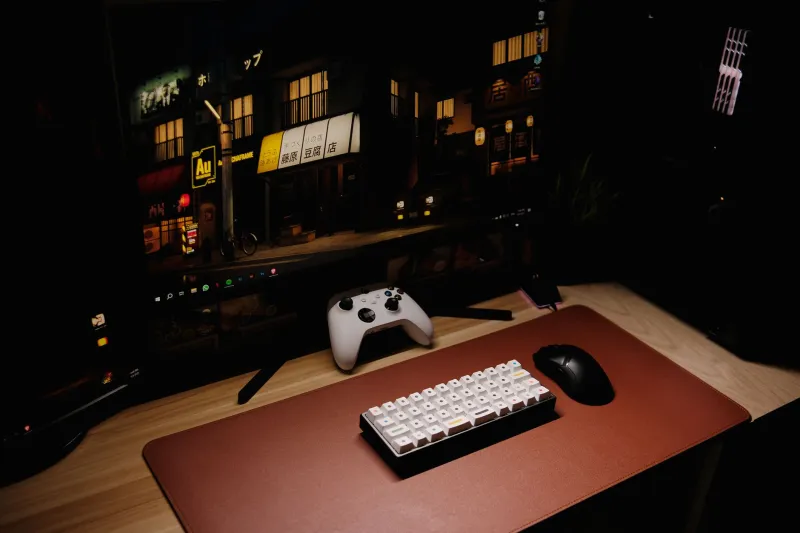
Walk into any gaming forum, Discord server, or subreddit long enough and you'll eventually stumble into the argument. It doesn't matter if the thread started about patch notes, ranked matchmaking, or someone's highlight reel clip. Somewhere in the replies, somebody will say it. "Console players ruined this game." Or maybe "KBM sweats think they're better than everyone." The specifics shift, but the heat stays the same.
What's actually happening beneath all that noise is more interesting than a simple preference debate. For a growing number of players, how you physically interact with a game has become inseparable from how you see yourself as a gamer — and how you expect others to see you.
More Than Buttons and Clicks
The technical differences between input methods are real and documented. Keyboard-and-mouse setups offer pixel-level precision in aiming-heavy games, which is why the format has dominated PC first-person shooters for decades. Controllers, by contrast, provide analog movement control that many players — especially those raised on console gaming — find more intuitive for third-person action, platformers, and sports titles. Then there's the growing ecosystem of alternative inputs: fight sticks, arcade-style leverless controllers, adaptive devices, and even motion controls that have carved out devoted followings in their own right.
But the communities built around these tools have long since moved past pure ergonomics. They've developed their own slang, their own hierarchies, and their own origin stories. Ask a lifelong PC gamer about their first mechanical keyboard and you'll get a story that sounds less like a product review and more like a coming-of-age memory. Ask a console player about their first DualShock and you'll get the same kind of warmth.
"People don't just use these things — they identify with them," says Marcus Reyes, who moderates a 40,000-member fighting game community based out of the Chicago area. "When someone attacks your input method, they're not critiquing your setup. They're telling you that you don't belong."
The Crossplay Pressure Cooker
The debate got considerably louder when crossplay became standard across major titles. Games like Fortnite, Call of Duty: Warzone, and Apex Legends started throwing controller and KBM players into the same lobbies, and suddenly what used to be a philosophical argument became a competitive one.
Controller players complained about mouse-aiming precision being an unfair structural advantage. KBM players fired back that aim assist — the software-assisted targeting built into most controller schemes — was essentially automation. Both sides found data to support their frustration, and neither side was entirely wrong. The result was a feedback loop of grievances that tournament organizers, game developers, and community leaders are still trying to untangle.
Some competitive scenes responded by segregating input methods entirely, running parallel brackets for controller and KBM players. Others doubled down on open formats, arguing that restricting inputs defeats the spirit of open competition. Neither approach has fully satisfied anyone, which tells you something about how deeply this runs.
The Identity Layer Nobody Talks About
Here's where it gets genuinely complicated: input preference often maps onto broader identity in ways that aren't always visible on the surface.
Console gaming has historically been more accessible — cheaper entry point, no hardware upgrades, plug-and-play simplicity. That means a lot of players from lower-income households, younger players, and people in communities with less exposure to PC gaming culture grew up on controllers. When someone dismisses controller players as casuals or lesser competitors, they're often — whether they realize it or not — signaling something about class, access, and who gaming is "really for."
On the other side, the fighting game community's longstanding embrace of arcade sticks and leverless controllers has its own cultural weight, rooted in a history of arcade culture that skews heavily toward specific regional and ethnic communities. Dismissing those input preferences isn't just a gameplay take — it's dismissing an entire lineage.
"We talk about accessibility in gaming like it's only about disability accommodations," says Priya Nair, who runs inclusive gaming workshops in the Pacific Northwest. "But access starts at the hardware level. If the 'correct' way to play requires $200 worth of peripherals someone can't afford, that's an accessibility issue too."
Communities Trying to Build Bridges
Not everyone is interested in fighting. A quieter but growing movement within competitive and casual gaming communities is actively working to make space for multiple input cultures under the same roof.
Some tournament organizers have started experimenting with formats that don't just tolerate different inputs but celebrate them — running exhibition matches that pit controller players against KBM users with transparent settings on both sides, letting audiences see exactly what each player is working with. The goal isn't to prove one method superior. It's to reframe the conversation around skill expression rather than hardware gatekeeping.
Other communities are investing in education. A handful of Discord servers dedicated to competitive shooters now run channels specifically designed to help players understand the mechanical tradeoffs of different inputs without the usual tribal sniping. The tone is noticeably different from the average Reddit thread — more curious, less defensive.
Then there's the accessibility angle, which may be doing the most long-term work. As adaptive controllers and alternative input devices become more visible in mainstream gaming spaces — partly thanks to initiatives like Microsoft's Xbox Adaptive Controller — the conversation around "what counts" as a legitimate way to play has started to shift. When a player using a single-switch input device is competing in the same space as someone with a $150 mechanical keyboard, the hierarchy starts to look a lot less natural than it once did.
What's Actually at Stake
None of this is going to resolve cleanly. The technical debates are real, the competitive stakes are real, and the cultural identities wrapped up in all of it are definitely real. But the communities that are figuring out how to hold all of that complexity without turning it into a purity test are the ones worth watching.
Gaming has always been a space where people found belonging — sometimes in spite of each other, sometimes because of each other. The input method wars are, in a weird way, proof of how much people care. You don't argue this passionately about something that doesn't matter to you.
The question is whether that passion becomes a wall or a door. And right now, there are people on both sides of that choice actively building something. Which side of history the broader community lands on is, genuinely, still up for grabs.