Built for Everyone: How the Gaming Communities Putting Accessibility First Are Winning the Long Game
There's a version of gaming culture that still gets romanticized — the one where you grind for thousands of hours, memorize every frame-perfect input, and earn your place at the table through sheer, relentless dedication. And look, there's nothing wrong with that path. But it's not the only one. And for a long time, it was treated like it was.
That's starting to change. Quietly, steadily, and in ways that don't always make headlines, a growing number of gaming communities are flipping the script. Instead of building a space and then figuring out who gets left out, they're asking the accessibility question first — before the game launches, before the Discord server gets its first member, before the first stream goes live. And the communities coming out of that approach? They're some of the most engaged, most loyal, and most genuinely fun spaces in digital entertainment right now.
The Gatekeeping Problem Nobody Wanted to Name
Hardcore gaming culture has a complicated history with who gets to call themselves a "real" gamer. Difficulty settings get mocked. Players who use accessibility features get dismissed. People with disabilities, older players, or folks who just don't have forty hours a week to sink into a single title have historically been treated like they're doing gaming wrong.
But here's the thing — that attitude was never actually about quality. It was about identity and exclusivity. And communities built on exclusion tend to plateau. They stop growing. They get insular. Eventually, they either evolve or they fossilize.
The communities that figured this out early are the ones worth paying attention to.
What "Accessibility First" Actually Looks Like
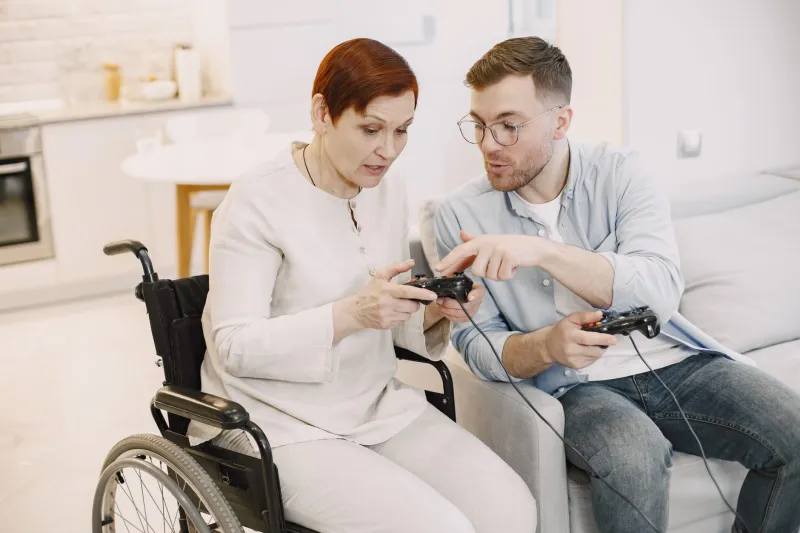
When people hear "accessibility in gaming," they often jump straight to adaptive controllers — and yes, hardware like Microsoft's Xbox Adaptive Controller has been genuinely transformative for players with physical disabilities. But accessibility-first design goes way deeper than hardware.
It shows up in how a community explains its own rules. Are the onboarding docs written in plain language, or do they assume you already know the jargon? It shows up in how streams are run — are captions a default, or an afterthought? It shows up in how difficulty is framed. Is "easy mode" treated as a lesser experience, or just a different entry point into the same story?
Some of the most intentional work is happening at the streamer level. Content creators who center accessibility — whether that's through consistent closed captioning, screen reader-friendly layouts, or just openly talking about their own disabilities — are building audiences that feel genuinely seen. And those audiences stick around. They clip, they share, they recruit their friends. They become community evangelists in a way that passive viewers rarely do.
The Developer Side of the Equation
On the development side, there's been a real shift in how accessibility features are being positioned. For years, features like colorblind modes, remappable controls, or adjustable text size were treated like bonus features — nice to have, buried in a settings menu, never mentioned in marketing. Today, some studios are leading with them.
Naughty Dog's accessibility suite in The Last of Us Part II set a new standard back in 2020, and the conversation it sparked is still echoing. More recently, indie developers — often working with smaller teams and tighter budgets — have been proving that you don't need AAA resources to prioritize this stuff. What you need is the intention to do it from day one, not as a patch after launch.
The payoff isn't just ethical. It's practical. A game or platform that works for a wider range of players has a wider potential audience. Communities that form around accessible games tend to be more diverse in age, background, and experience level — and that diversity makes the community itself more interesting. More perspectives. More creative problem-solving. More reasons to log on.
Community Leaders Are Setting the Tone
Maybe the most underrated piece of this puzzle is the human element — the moderators, Discord admins, and community managers who actually set the cultural temperature of a space.
In communities where accessibility is genuinely valued, that value gets modeled from the top. When a server admin uses image descriptions in their posts, other members start doing it too. When a streamer calls out ableist language in their chat without making a huge production of it, that becomes the norm. Culture is contagious, and the people running these spaces have more influence over what spreads than they often realize.
Some communities have gone further, building explicit accessibility channels or resource hubs where members can share tips — everything from recommended controller setups for one-handed play to guides on managing gaming fatigue for players with chronic illness. These aren't just nice gestures. They're infrastructure. They signal that this community was built with you in mind.
Challenging the "Earned Experience" Myth
One of the stickiest arguments against accessibility-first design is the idea that difficulty and barriers create meaning. That if you can just skip the hard parts, the achievement loses its weight.
But that argument conflates challenge with exclusion. You can have a genuinely difficult, rewarding, skill-testing game that also has options for players who need them. The existence of an easier path doesn't erase the harder one. And more importantly, the player navigating a game with one hand, or with a visual impairment, or with a processing disorder isn't having a lesser experience — they're having their experience. And they're doing it in spite of barriers that never needed to exist in the first place.
The communities that get this aren't softening gaming. They're expanding it.
Why This Matters for the Future of Gaming Culture
NexPlay Hub covers a lot of ground when it comes to gaming communities — the weird ones, the passionate ones, the ones building something real in the margins of the mainstream. And what keeps showing up, across all of those spaces, is that the healthiest communities are the ones that thought carefully about who they were building for.
Accessibility-first isn't a trend. It's not a PR strategy. It's a design philosophy that happens to produce better communities — more engaged, more diverse, more resilient. And as gaming continues to grow into one of the dominant cultural forces in American entertainment, the spaces that figured this out early are going to look like pioneers.
The skill gap worth closing isn't between casual and hardcore players. It's between the communities that built walls and the ones that built doors.
The door-builders are winning.