Small on Purpose: Why Gaming's Most Dedicated Communities Are Going Invisible
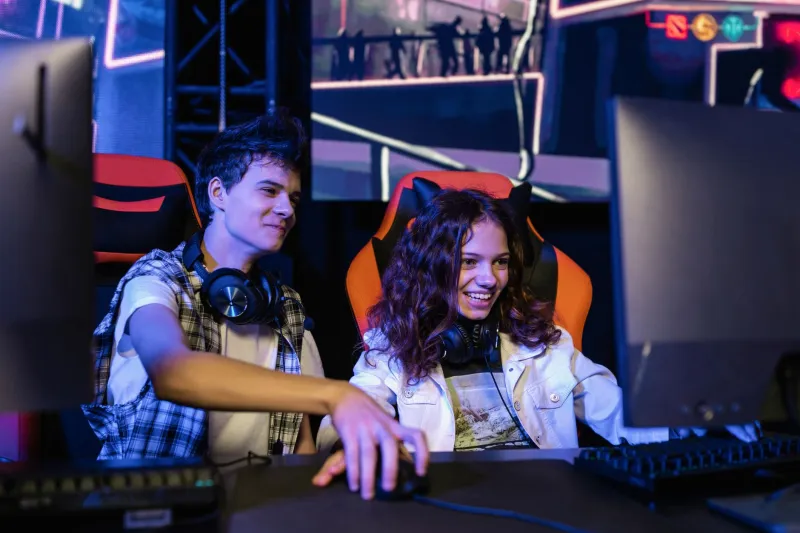
There's a Discord server somewhere in the Midwest — about 200 members, no public invite link, no SEO footprint, no verified badge. To get in, you need to know someone who already knows someone. The server has been running for three years. It has never been posted about on Reddit. The mods want to keep it that way.
This isn't unusual anymore. Across the gaming world, a quiet but deliberate retreat is happening. Communities that once chased follower counts and engagement metrics are pulling up the drawbridge, choosing smallness over scale and obscurity over discoverability. And the reasons behind that choice say a lot about where digital culture is headed.
The Moment the Feed Stopped Feeling Like Home
For most of the 2010s, the playbook was pretty simple: grow your community on Twitter, build a subreddit, maybe stream on Twitch. Bigger was better. More reach meant more relevance. Platforms rewarded growth, and communities chased that reward like it meant something.
Somewhere along the way, that math stopped working.
Algorithmic timelines started surfacing content based on engagement rather than community health. Recommendation engines pushed viral drama over quiet camaraderie. Moderation became a nightmare as public-facing spaces attracted bad-faith actors faster than any volunteer mod team could handle. And increasingly, the people who'd built these communities from scratch started feeling like strangers in their own spaces.
"The platform would push our server to random people, and suddenly we'd have a flood of new members who had no idea what we were about," says Marcus, a longtime moderator of a fighting game community based out of Chicago. "The culture we'd spent two years building just started eroding. It felt like we were constantly starting over."
The solution, for Marcus and a growing number of community builders like him, wasn't to fight the algorithm. It was to disappear from it entirely.
Invite-Only Isn't Elitism — It's Engineering
There's a misconception that private, invite-only gaming spaces are gatekeeping in the negative sense — exclusive clubs built to keep people out. The moderators running these communities push back hard on that framing.
What they're actually doing, they argue, is engineering for trust. When every member enters through a personal referral, there's a baseline of accountability that no public platform can replicate. You vouched for someone. That means something. It creates a social contract that algorithmic onboarding simply can't manufacture.
Jennifer, who runs a 150-person Telegram group focused on indie RPGs, describes it as "growing through relationships instead of growing through reach." Her group doesn't advertise. New members come in through word of mouth, usually from people who've already been in the group for six months or more. The vetting isn't formal — there's no application form — but it's real.
"Everyone in here has been brought in by someone who cares about the space," she says. "That changes how people behave. There's less posturing, less clout-chasing. People actually talk to each other."
Custom Forums, Encrypted Chats, and the Infrastructure of Intimacy
Discord is the most common home base for these private communities, but it's far from the only one. Some groups have migrated to Telegram, drawn by its stronger encryption and less corporate feel. Others have gone further, spinning up self-hosted forums on platforms like Discourse or even building custom web spaces that live entirely outside mainstream social infrastructure.
The technical lift isn't trivial, but for communities serious about independence, it's worth it. Self-hosting means no algorithm, no advertising, no terms-of-service changes that could upend the community overnight. It also means the data belongs to the community, not to a corporation trying to monetize attention.
For gaming communities specifically, this matters in ways that go beyond just privacy. Games are a deeply personal hobby for a lot of people. The spaces where they talk about games — where they share frustrations, celebrate wins, process the weird emotional weight that games can carry — those spaces feel intimate in a way that a public subreddit never really can.
"I've talked about stuff in our server that I'd never post publicly," says Derek, a member of a long-running Souls-like fan community. "Not because it's embarrassing, but because the conversation is different when you're not performing for an audience. You're just talking to people who get it."
The Trust Problem Nobody Wants to Name
Underlying all of this is something the gaming community doesn't always say out loud but clearly feels: a deep erosion of trust in the platforms that host digital life.
Data breaches, shadow bans, arbitrary moderation decisions, recommendation systems that seem designed to radicalize rather than connect — the list of grievances is long. And for communities that have been burned before, the appeal of going small and going private is fundamentally about reclaiming control over something that once felt like it belonged to them.
This is especially true for communities that exist around niche or marginalized interests. Women-led gaming groups, LGBTQ+ gaming spaces, communities built around games that don't have mainstream appeal — these are the spaces that have historically been most vulnerable to harassment campaigns, platform indifference, and algorithmic invisibility. Going private isn't just a preference for them. For many, it's a survival strategy.
What Growth Culture Gets Wrong
The dominant logic of social media has always been that bigger is better, that scale equals legitimacy, that a community of 10,000 is inherently more valuable than a community of 100. The private server movement is a direct rejection of that logic.
What's emerging instead is something closer to the early internet's vision of online community — small, weird, specific, and real. Groups built around hyper-niche interests, where the shared passion is so specific that it functions as its own filter. You don't need an application process when the topic itself screens for the right people.
Marcus puts it plainly: "I don't want to be the biggest fighting game server on Discord. I want to be the best one for the people who are already here. Those are completely different goals, and for a long time, the internet made us feel like the first goal was the only one worth having."
Where This Goes From Here
It's hard to know whether the private server trend represents a permanent shift or just a correction. Platforms will adapt — some are already experimenting with features designed to give community managers more control over discoverability. Whether that's enough to win back the communities that have already left is another question.
What's clear is that for a meaningful slice of the gaming world, the calculus has changed. The appeal of being findable, of growing, of optimizing for reach — it's lost its shine. What people want now is something quieter, something that doesn't require them to perform for an audience or compete for algorithmic favor.
They want a place that feels like it belongs to them. And increasingly, they're building it themselves, in spaces the algorithm will never find.