Cartridges, Conservation, and Controversy: The People Racing to Save Gaming's Past
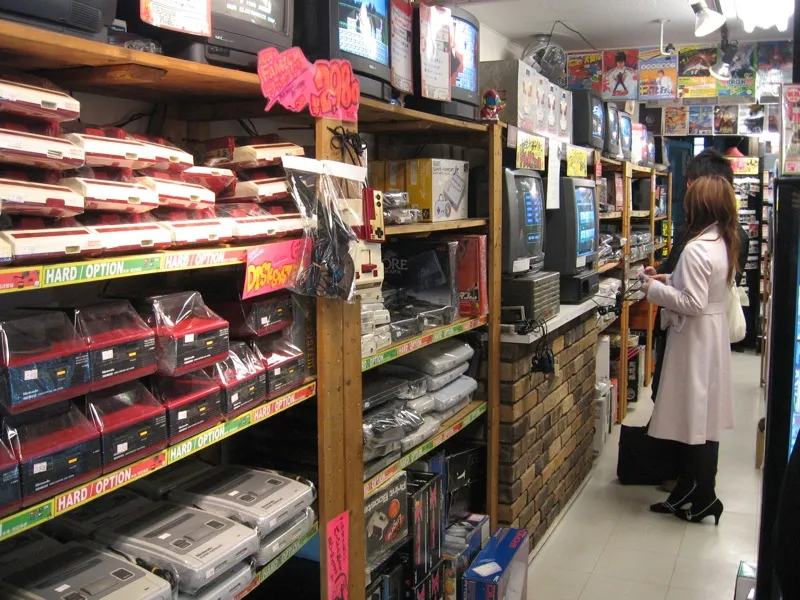
Photo: Nicholas, CC BY 2.0, via Wikimedia Commons
Cartridges, Conservation, and Conservation: The People Racing to Save Gaming's Past
Walk into the right person's basement in suburban Ohio or a spare bedroom in Portland, and you might feel like you've stumbled into a very specific kind of museum. Shelves lined with cartridges in protective cases. Consoles wired to upscalers and CRT monitors. Spreadsheets tracking acquisition dates, seal grades, and regional variants. These aren't just collectors in the traditional sense — they're archivists, and they'll tell you there's a difference.
The retro gaming preservation community has grown into something genuinely significant over the last decade, fueled by rising prices, a deeper cultural conversation about what gaming history means, and the uncomfortable reality that without intervention, a lot of it is simply going to disappear.
More Than a Hobby, Less Than a Museum
Ask a serious collector why they do it, and you'll rarely get a simple answer. For many, it starts with nostalgia — a childhood memory attached to a particular game or system. But somewhere along the way, the motivation evolves. You start learning about games that never made it to the US. You find out about prototype cartridges that exist in single-digit quantities. You discover that certain titles were only produced in small regional runs and that the few remaining copies are deteriorating in storage units across the country.
Suddenly, it stops being about owning something cool and starts feeling more like a race against time.
Deirdre Callahan, a collector based outside of Chicago who focuses on early PC gaming and obscure console releases, describes the shift this way: "I started because I wanted to play the games I grew up with. Then I started learning about all the stuff that almost didn't survive, and it genuinely scared me. There are games that only exist today because one person happened to hold onto a copy. That's not a system — that's luck."
Her collection includes working hardware she maintains herself, documentation she's sourced from developers, and a backup archive of ROM files she's made from cartridges she owns. That last part is where things get complicated.
The Emulation Debate Nobody Wants to Have Cleanly
Emulation is the third rail of retro gaming preservation. Everyone has an opinion, most of those opinions are strongly held, and the legal landscape is genuinely murky enough that reasonable people land in very different places.
The basic argument from preservationists is practical: physical media degrades. Cartridge batteries die. Optical discs rot. Hard drives fail. If a game only exists in physical form and those physical copies are lost or destroyed, the game is gone forever. Digital backups — ROM files — are the only reliable long-term preservation method.
The counterargument, at least from publishers and some legal scholars, is that creating or distributing ROM files without authorization is copyright infringement, regardless of intent. The fact that you own a physical copy doesn't automatically grant you the right to create a digital backup, at least under current US copyright law — though that legal interpretation is contested and has never been fully tested in court.
What this creates is a community that largely operates in gray zones, making its own ethical determinations. Most serious preservationists draw a firm line between archiving games for preservation purposes and distributing commercial ROM files for free play. They'll argue — convincingly — that the two things are not the same, even if the law doesn't currently make that distinction cleanly.
The Video Game History Foundation, a nonprofit doing institutional preservation work, has been vocal about pushing for legal reform that would give libraries and archives clearer rights to preserve games digitally. Their research found that over 87% of classic video games are currently out of print and commercially unavailable — meaning the only way to access them is through preservation efforts, legal or otherwise.
What Separates Collectors from Hoarders
Not everyone in the retro collecting space is motivated by preservation ideals, and the community is honest about that tension. The market for sealed, graded cartridges has exploded in recent years, turning some corners of retro gaming into something closer to speculative investing than cultural stewardship. A sealed copy of Super Mario Bros. selling for hundreds of thousands of dollars doesn't preserve anything — it just locks a piece of history behind a financial barrier.
Serious preservationists tend to be pretty openly critical of the grading and sealing culture. If a game sits in an acrylic case because it's worth money, it's not being preserved — it's being hoarded. Real preservation means documentation, accessibility, and redundancy. Multiple copies across multiple formats in multiple locations, with the knowledge of how to use them passed along to the next generation of enthusiasts.
This is where the community gets genuinely interesting, because it's having conversations about stewardship that most industries don't bother with until it's too late. Who gets to decide what's worth saving? Is a licensed sports game from 1994 worth preserving with the same rigor as a landmark RPG? (Many collectors say yes — even the mundane stuff tells us something about what gaming was.)
The Question of Institutional Trust
Should preservation be left to museums and libraries rather than passionate fans? It's a fair question, and the honest answer from most collectors is: both, and we can't afford to wait for institutions to catch up.
The Smithsonian has made moves toward game preservation. The Library of Congress has begun archiving select titles. But institutional processes are slow, budgets are limited, and the sheer volume of gaming history that needs to be documented is staggering. Fan communities move faster, operate with more specialized knowledge, and often have access to materials that institutions don't.
The ideal, most preservationists will tell you, is a genuine partnership — fans doing the grassroots work of finding, documenting, and backing up, while institutions provide the long-term stability and legal legitimacy that volunteer networks can't sustain alone.
Until that partnership fully materializes, the collectors will keep doing what they do: hunting down cartridges at estate sales, carefully cleaning corroded contacts, and making sure that the games that shaped a generation don't quietly vanish from history.