Breaking Games on Purpose: How Speedrunning Went from Basement Hobby to Must-Watch Sport
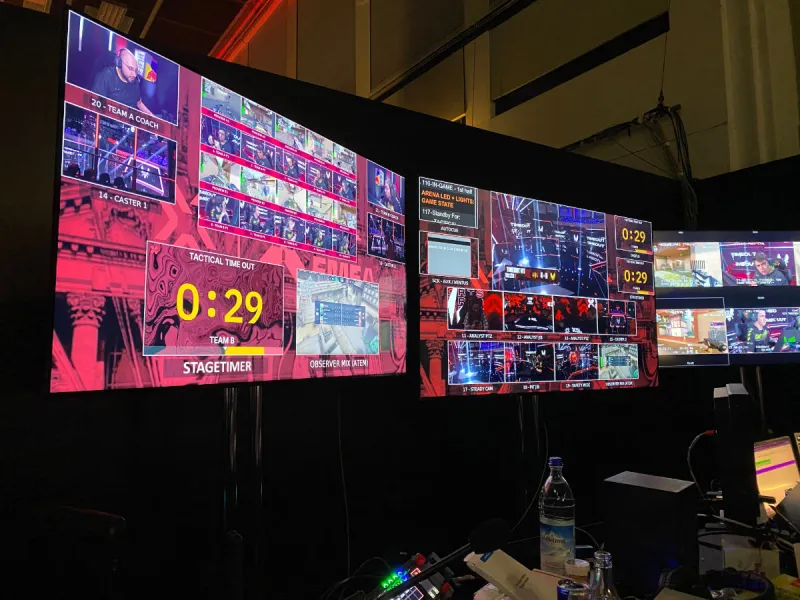
Photo: gamer speedrunning timer screen competitive gaming setup, via stagetimer.io
There's a particular kind of magic in watching someone finish Super Mario 64 in under seven minutes. Not because it's impressive in the traditional sense — though it absolutely is — but because every second of it feels wrong in the best possible way. Mario clips through walls. The camera spins out. Stages that took most of us hours as kids evaporate in seconds. And yet, somehow, it all makes perfect sense once you've spent five minutes in a speedrunning community.
Speedrunning has been quietly building momentum for decades. But somewhere between the rise of Twitch, the cultural juggernaut that is Games Done Quick, and a wave of viral YouTube breakdowns, it crossed over. It stopped being a hobby for the ultra-dedicated and became something that casual fans, non-gamers, and even people who've never picked up a controller find genuinely riveting. The question worth asking is: why now, and what exactly does this say about where gaming culture is headed?
From IRC Channels to Prime Time
The roots of speedrunning stretch back to the early days of Doom and Quake, where players competed to tear through levels with surgical efficiency. The practice lived mostly in forums and IRC channels — tight-knit groups sharing route notes and frame-by-frame analysis with the enthusiasm of scientists comparing lab results.
For a long time, it stayed underground. The barrier to entry wasn't just skill — it was the sheer volume of arcane knowledge required. Learning a game's glitches, understanding how memory behaves, mapping out optimal movement paths — these weren't casual weekend activities. They were obsessions.
But streaming changed the equation entirely. Suddenly, the obsession had an audience. Runners who had been practicing in isolation could broadcast their attempts to thousands of viewers in real time. And what those viewers discovered was that watching someone break a game was, counterintuitively, more entertaining than watching someone play it traditionally.
Why Watching Someone Else Destroy a Game Feels So Good
There's a genuine psychological hook at the center of speedrunning's appeal, and it goes deeper than novelty. Part of it is nostalgia — seeing a beloved childhood game dismantled by someone who understands it on a level you never could creates a strange, satisfying emotional dissonance. You recognize the world, but not the rules.
Then there's the underdog-versus-system narrative baked into every run. A speedrunner isn't just competing against a clock — they're competing against the game's designers, exploiting every unintended gap the developers left behind. There's something almost rebellious about it, a David-and-Goliath energy that resonates even if you've never touched the source material.
Psychologists who study flow states might also point to the vicarious satisfaction audiences get from watching peak performance. Just like watching an elite athlete, there's a kind of borrowed competence that kicks in — you feel the precision even if you couldn't replicate it yourself.
Games Done Quick and the Power of Charity
If one event deserves credit for mainstreaming speedrunning in the US, it's Games Done Quick. The biannual charity marathon, which raises millions for organizations like Doctors Without Borders and the Prevent Cancer Foundation, packages speedrunning into something even skeptics can get behind.
GDQ runs aren't just about finishing games fast — they're performances. Runners explain what's happening in real time, breaking down the logic behind each exploit. The couch commentary turns esoteric glitch knowledge into accessible storytelling. You don't need to know anything about The Legend of Zelda: Ocarina of Time to feel the tension of a blindfolded run or laugh along with a crowd reacting to a perfectly timed trick.
The charity angle matters too. It reframes the whole experience as community-driven and purposeful, which probably goes a long way toward making speedrunning feel welcoming rather than intimidating.
Not Just Mario: The Diversity of the Scene
One of the most underrated aspects of modern speedrunning is just how wide the tent has become. Yes, the classic Nintendo titles dominate leaderboards and YouTube thumbnails. But the community runs everything — obscure PS2 JRPGs, mid-2000s licensed games, walking simulators, horror titles, and games so broken they practically run themselves.
Category variety has also exploded. "Any%" runs — where anything goes and the only goal is reaching the credits — sit alongside "100%" runs that demand exhaustive completion, "glitchless" categories that strip out exploits entirely, and increasingly creative novelty formats like "blindfolded" or "one-handed" runs that layer additional challenges on top of the base game.
This breadth means there's a genuine entry point for almost everyone. Casual players who want to shave a few minutes off their personal Stardew Valley playthrough can find communities as welcoming as the elite Celeste runners chasing world records. The scene has developed a culture of documentation and mentorship — wikis, Discord servers, and dedicated tutorial runners who exist specifically to help newcomers find their footing.
The Content Creator Effect
Speedrunning's mainstream breakthrough also owes a significant debt to a specific type of YouTube content: the deep-dive explainer. Channels that break down world record runs frame by frame, explaining the underlying mechanics behind each glitch, have racked up tens of millions of views from audiences who will never attempt a run themselves.
This explainer format has been transformative. It turns speedrunning from a spectator sport into an intellectual puzzle that anyone can engage with. Suddenly, understanding why a character clips through a wall is as satisfying as watching it happen. The community's obsessive documentation — which was always one of its defining traits — turned out to be exactly the kind of raw material that thrives on YouTube's algorithm.
Streamers like Summoning Salt, who packages speedrunning history into cinematic narratives complete with dramatic music and meticulous research, have demonstrated that the stories behind the records are just as compelling as the runs themselves.
Where It Goes From Here
Speedrunning is at an interesting crossroads. Its growth has brought visibility, sponsorships, and a broader audience — but also the growing pains that come with any subculture scaling up. Questions about cheating and verification have become more prominent as stakes rise. Some longtime community members worry that mainstream attention changes the vibe of spaces that were defined by their insularity and shared obsession.
But the fundamentals are sound. Speedrunning taps into something genuinely universal: the desire to understand a system deeply enough to master it, and the satisfaction of watching that mastery in action. Whether you're a lifelong gamer or someone who stumbled onto a GDQ highlight reel at 2 a.m., there's something magnetic about watching a person push a game to its absolute limit — and then past it.
At NexPlay Hub, we think that magnetism isn't going anywhere. If anything, as gaming continues to evolve and new generations of players bring fresh perspectives to classic and modern titles alike, the art of breaking games on purpose is only going to get more interesting to watch.