Soft Worlds, Real Relief: Why Millions of Americans Are Choosing Calm Over Chaos in Gaming
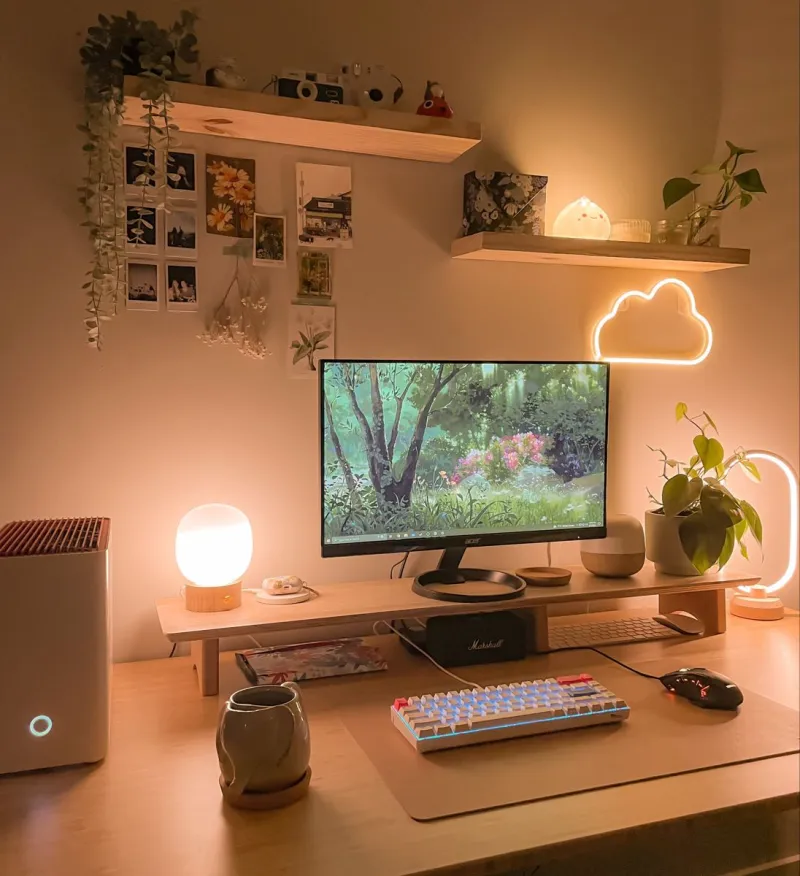
Photo: cozy gaming setup warm lights plants peaceful bedroom desk, via i.pinimg.com
There's a moment in Stardew Valley — maybe you've had it — where you're just standing by the river at sunset, fishing rod in hand, absolutely nothing at stake. No timer. No enemy. No pressure. And somehow, that moment feels more satisfying than any headshot or raid clear you've pulled off in years.
That feeling has a name now: cozy gaming. And it's not a small trend. It's quietly become one of the most significant cultural shifts in the entertainment industry over the last decade.
What Even Is a Cozy Game?
The term gets thrown around a lot, so let's nail it down. Cozy games are titles designed to minimize stress and maximize comfort. They typically feature low or nonexistent fail states, gentle aesthetics, slow-paced gameplay loops, and themes centered around creativity, community, or nature. Think farming sims, life simulators, crafting games, and cozy mysteries.
Stardew Valley, Animal Crossing: New Horizons, Unpacking, A Short Hike, Spiritfarer, Cozy Grove — the roster is deep and growing fast. According to data from the NPD Group, life simulation and casual games saw a combined sales spike of over 40% between 2019 and 2022 in the US market alone. That's not a blip. That's a movement.
The Burnout Generation Finds Its Game
It's hard to talk about cozy gaming without talking about the cultural moment it arrived in. The late 2010s and early 2020s saw American workers, students, and families hit by wave after wave of collective stress — economic instability, a global pandemic, social unrest, and a digital media environment that never, ever turns off.
Psychologists have a term for what cozy games offer: restorative experience. Dr. Rachel Kowert, a research psychologist who specializes in gaming and mental health, has written extensively about how games that offer autonomy, low stakes, and predictable reward loops can genuinely reduce cortisol levels and help players decompress. In other words, tending to your Animal Crossing island isn't just fun — it's functionally calming in ways that high-adrenaline titles simply aren't built to be.
For a generation that grew up hearing "just relax" while being handed smartphones, tablets, and an endless content feed, cozy games offer something radical: intentional slowness.
Developers Are Listening — And Building Accordingly
The commercial success of cozy games hasn't gone unnoticed by developers, both indie and AAA. Studios that once focused exclusively on action or competitive titles are now exploring gentler design philosophies.
Concerned Ape, the one-person studio behind Stardew Valley, is practically the patron saint of the movement. Eric Barone built the game as a personal project over four years, drawing from his own need for a slower, more meaningful experience. The game has now sold over 20 million copies worldwide, with a massive chunk of that audience in the US.
Smaller studios have followed suit. Games like Coral Island and Haunted Chocolatier (also from Concerned Ape, currently in development) are attracting serious anticipation not because of their combat systems, but because of their promise of warmth. Developers are openly marketing their games around comfort, self-expression, and community — language that would have seemed almost laughably soft in gaming circles ten years ago.
The Social Layer: Cozy Communities, Not Just Cozy Games
Here's what makes cozy gaming more than just a genre preference: the community that's built up around it. Platforms like Reddit's r/CozyGamers (over 300,000 members), TikTok's #cozygaming hashtag (billions of views), and dedicated Discord servers have transformed cozy gaming into a full cultural identity.
Players share screenshots of their farm layouts. They post their Animal Crossing island tours like home design reveals. They swap tips on the best games for anxiety or insomnia. There's a care and vulnerability in these spaces that you don't always find in competitive gaming communities, and it's drawing in people who never considered themselves "gamers" at all.
That's a huge deal for the industry. Cozy games are expanding who plays games — pulling in older millennials, women, people with disabilities, and folks who bounced off traditional gaming years ago. According to a 2023 survey by the Entertainment Software Association, 48% of US gamers identify as female, and genres skewing toward cozy and casual content are a major driver of that growth.
Redefining What "Fun" Actually Means
For decades, the dominant definition of fun in gaming was tied to mastery — getting better, beating challenges, climbing rankings. Cozy games challenge that assumption at a fundamental level. Fun, they suggest, can also mean wandering. Decorating. Talking to a villager. Watching seasons change.
This isn't a dumbing-down of gaming. It's a broadening of it. And honestly, it's overdue.
Game designers like Tanya Short (Boyfriend Dungeon, Caves of Qud) have talked openly about designing for emotional resonance rather than mechanical challenge. The goal isn't to make players feel powerful — it's to make them feel seen, safe, or simply at peace for a little while.
For a lot of Americans right now, that's exactly what they need.
What's Next for the Cozy Corner?
The cozy gaming space isn't slowing down. If anything, it's getting more ambitious. Titles are starting to blend cozy aesthetics with deeper narratives, social commentary, and even light RPG mechanics — proving the genre has more range than its soft edges suggest.
Major publishers are taking notice too. Nintendo's continued investment in Animal Crossing, Xbox's acquisition of studios with lifestyle game portfolios, and the explosion of cozy-themed game showcases (yes, there are now dedicated cozy gaming directs on YouTube) all signal that this isn't a passing phase.
Here at NexPlay Hub, we've watched the cozy gaming community grow from a quiet corner of our forums into one of the most active and welcoming spaces on the platform. And that tracks. Because at its core, cozy gaming is about belonging — to a world that's gentle, to a community that's kind, and to a version of entertainment that doesn't demand anything from you except your presence.
Sometimes, that's the most powerful thing a game can offer.